1. Introduction: From emissions trading to border adjustment
To understand the European Union's Carbon Border Adjustment Mechanism (CBAM), it is useful to look at the two decades of European climate policy preceding its introduction. After all, CBAM is not an isolated instrument, but rather the extension of European emissions trading to imports from third countries. This guide first provides a historical context for the mechanism and then systematically breaks down the practical obligations, deadlines, and cost implications for importing companies.
1.1 The origins: Kyoto and the launch of the EU Emissions Trading System in 2005
In the 1997 Kyoto Protocol, the then-European Community committed for the first time to a legally binding reduction of its greenhouse gas emissions under international law. As a core instrument for achieving this goal, the EU created the European Union Emissions Trading System (EU ETS) with Directive 2003/87/EC, which entered into force on January 1, 2005, as the world's first major CO₂ trading system. The basic idea remains unchanged to this day: a politically determined, annually decreasing cap limits the total emissions of the sectors covered by the EU ETS (energy industry and energy-intensive industry, later also aviation and maritime transport). Plant operators must surrender an emission allowance (EUA) or an EU ETS certificate for every ton of CO₂ equivalent emitted. These certificates are partly issued to participating companies free of charge and partly brought into the sectors via exchange auctions. Since the certificates are subsequently tradable, a secondary market for CO₂ certificates has formed. The core idea is therefore: the market provides incentives for emission reductions where they can be achieved most cost-effectively.
1.2 The unresolved problem: Carbon leakage
A CO₂ price that applies only within Europe creates a cost disadvantage for European production compared to competitors from third countries without a comparable CO₂ price. This can result in the relocation of production, and thus emissions, to countries with more lenient regulations. This phenomenon is known as carbon leakage. This creates two problems: first, it does not help the climate, and second, it harms European industry. For years, the EU attempted to solve this problem through the free allocation of emission allowances. Industrial sectors facing intense global competition, in particular, benefited from these allocations. However, this solution has long been considered unsatisfactory, as the mechanism of free allocation weakens the price signal of emissions trading and the competitive disadvantages for large parts of European industry remain. Furthermore, imports and the manufacturers behind them in third countries remained completely unaffected.
1.3 Green Deal, Fit for 55, and the birth of CBAM
With the European Green Deal at the end of the 2010s and its enshrined goal of climate neutrality by 2050, the EU significantly tightened its climate policy. Part of this legislative package was the proposal for a Carbon Border Adjustment Mechanism: instead of relieving domestic producers through free allocation, importers would in future be required to pay a CO₂ price equivalent to the EU ETS for the emissions "embedded" in imported goods. Following intensive negotiations, the CBAM Regulation (EU) 2023/956 was adopted on May 10, 2023. It pursues a dual objective: to prevent carbon leakage and provide third countries and their manufacturers with an incentive for decarbonization, while also protecting European manufacturers from unequal competitive conditions. CBAM is, however, designed to be phased in gradually; the free allocation of certificates under the EU ETS will be phased out for CBAM sectors, while the border adjustment will increase at the same rate.
1.4 The transition phase 2023 to 2025: Learning without numbers
To give companies, authorities, and non-EU manufacturers time to adapt, CBAM initially launched on October 1, 2023, as a reporting-only system. Importers were required to submit quarterly CBAM reports on import volumes and embedded emissions—initially based on default values, and increasingly on actual manufacturer data—without any obligation to purchase CBAM certificates or pay a financial levy. This phase exposed the difficulties of CBAM: obtaining reliable emissions data from global supply chains, correctly classifying goods for customs purposes, and the significant administrative burden, particularly for importers of small quantities.
1.5 2025 Omnibus simplification and the start of the definitive phase
The European legislator responded to the difficulties of the transitional phase with Amending Regulation (EU) 2025/2083 of October 8, 2025 ("Omnibus I"). It simplified the mechanism without calling its objectives into question. The most important change in the Omnibus agenda for CBAM was the introduction of a de minimis threshold of 50 tonnes of net mass per importer per year. This removes the vast majority of occasional importers from the scope, while still covering almost all imported emissions according to the Commission. Furthermore, the initial sale of CBAM certificates was postponed from 2026 to February 1, 2027, which means that the 2026 CBAM year will be processed retroactively. The deadlines for surrendering certificates were staggered for subsequent years, etc. The definitive phase has been running since January 1, 2026: the financial obligation to offset emissions arises for all CBAM goods imported since then—with the first settlement taking place in 2027.
2. Scope: Which goods and who is affected?
2.1 Covered product groups
In its current stage of development, CBAM covers product groups that have a relatively low level of processing, are particularly emissions-intensive, and are subject to a high risk of carbon leakage. The scope is defined by customs tariff numbers: Annex I of the CBAM Regulation provides an exhaustive list of the covered CN codes. Whether a product is affected is therefore not determined by its name, but by its correct customs tariff number.
Products such as screws, nuts, and other fasteners made of iron or steel are already within the scope. In addition, certain raw materials (such as sponge iron or ferroalloys of certain headings) are covered. An expansion to include approximately 200 further, more processed steel and aluminum goods is planned for January 1, 2028; the legislative process is well advanced. The affected customs tariff numbers and the implications for mechanical engineering, metal products, and wholesale are covered in detail in Chapter 11.
2.2 Overview of customs tariff numbers
Whether a product is subject to CBAM is determined solely by its classification in the Combined Nomenclature. Annex I of Regulation (EU) 2023/956 provides an exhaustive list of the covered CN codes. Neither the product description on the delivery note nor the material description in the master data is decisive—the eight-digit code number (CN code) of the customs declaration is what matters.
In practice, this means: The first step in any assessment of whether you are affected is to compare the complete import item against the CN codes in the table above. Three points are regularly prone to errors:
Subheadings with exceptions: Not every eight-digit heading under a covered four-digit heading is automatically subject to CBAM. In the iron, steel, and aluminum sectors, individual subheadings are explicitly excluded.
Scrap: Waste and scrap of iron and steel (heading 7204) as well as aluminum waste and scrap (heading 7602) are not covered. The intention is specifically not to burden recycled material.
Mixed shipments: If a shipment contains both CBAM goods and non-covered goods, only the net mass of the CBAM goods counts toward the de minimis threshold. This must be recorded separately for each CN code.
Net mass is therefore the key control metric: it determines whether the regulation applies in the first place (de minimis threshold) and also serves as the quantity of goods used to calculate the number of certificates. The de minimis threshold does not apply to electricity and hydrogen; for these, obligations apply from the very first import.
2.3 Exemptions and the de minimis threshold
Goods originating from countries that participate in the EU ETS or operate a linked system—currently Iceland, Liechtenstein, Norway, and Switzerland—are not covered. In addition, there are exemptions for items such as returned goods and goods for military purposes. The most practically significant exemption is the de minimis threshold introduced by the Omnibus Regulation: importers who import a total of less than 50 tonnes of net mass of CBAM goods in a calendar year are exempt from CBAM obligations (this threshold does not apply to electricity and hydrogen). The threshold applies per importer per year; anyone who exceeds it is subject to the full scope of obligations. Companies near the threshold should therefore monitor their import volumes continuously, especially since they are required to fulfill their CBAM obligations without prior notice.
2.4 Exceeding the 50-tonne threshold during the year
The de minimis threshold is not permanent and can be exceeded during the current calendar year. If you assume at the beginning of the year that you will remain under 50 tonnes, you may exceed the threshold due to reorders, a single large order, or simply strong business performance. Article 22(2a) of the CBAM Regulation contains a specific transitional rule for exactly this scenario.
The rule in a nutshell
For declarants who were initially exempt, the obligation to surrender certificates applies for the first time at the end of the quarter following the quarter in which the threshold was exceeded.
For example: A company exceeds the 50-tonne threshold in May, which is in the second quarter. The obligation to surrender certificates then applies for the first time on September 30 of the same year—the end of the third quarter. This effectively gives the company a one-quarter lead time to obtain emissions data and purchase certificates.
The scope of the obligation is important: all CBAM imports for the entire calendar year are covered retroactively, not just those from the time the threshold was exceeded. Imports from the period of the supposed exemption must also be fully declared and covered with certificates.
For companies near the threshold, this results in three practical consequences:
Ongoing volume monitoring: The cumulative net mass of all CBAM goods should be evaluated monthly, not just at the end of the year.
Apply for authorization as a precaution: Authorization as a CBAM declarant is a prerequisite for importation and is not only required once the threshold is exceeded. Anyone who can foresee crossing the threshold should submit the application early – the process takes time.
Maintain emission data: Manufacturer data for the entire year often cannot be obtained retroactively. Anyone who only begins data collection in the third quarter will regularly end up using the expensive default values for imports from the first half of the year.
2.5 Affected stakeholders
The addressee of CBAM obligations is the importer in the customs sense – that is, the person who releases the goods for free circulation or in whose name this is done. In the case of indirect representation, the indirect customs representative can assume the role of the CBAM declarant, provided they agree to do so. For companies that source CBAM goods through intermediaries, it is crucial to determine who acts as the importer for customs purposes: only they bear the CBAM obligations. The contractual passing on of CBAM costs in the supply chain can be regulated independently of this, but should then be explicitly addressed in purchasing contracts.
3. Authorization as a CBAM declarant
Since January 1, 2026, CBAM goods may generally only be imported by persons who hold the status of an "authorized CBAM declarant." When this rule was introduced, a transitional provision applied: those who had submitted their application for authorization by March 31, 2026, at the latest, were allowed to continue importing provisionally until a decision on the application was made. Companies that have not yet submitted an application and are above the de minimis threshold should do so with the highest priority, as there is a risk of a de facto import ban on CBAM goods without authorization.
The application is submitted electronically via the CBAM registry and reviewed by the competent national authority – in Germany, this is the German Emissions Trading Authority (DEHSt) at the Federal Environment Agency. The requirements for authorization essentially include being established in the Union's customs territory, holding an EORI number, the applicant's reliability (no serious or repeated violations of customs and tax regulations), and the financial and operational capacity to fulfill CBAM obligations. Upon authorization, the declarant receives a CBAM account in the registry, through which future declarations, certificate purchases, and surrenders will be processed.
The authorization procedure is regulated in more detail in Implementing Regulation (EU) 2025/486; technical processing via the CBAM registry follows Implementing Regulations (EU) 2024/3219 and (EU) 2025/2550. The competent authority may attach conditions to the authorization and require a security deposit, particularly in the case of newly established companies or a lack of import history.
4. Emission determination and verification
4.1 The concept of embedded emissions
The "embedded" emissions of the imported goods are priced – that is, the greenhouse gas emissions generated during their production, expressed in tonnes of CO₂ equivalent per tonne of goods. Direct emissions from the production process are always recorded; whether indirect emissions from the electricity consumed for production must also be included has been determined by sector since 2026 and is definitively regulated (more on this shortly). The calculation also includes the precursors of a good. For steel, for example, the embedded emissions from the production of the precursor pig iron are just as relevant as those of the steel itself. The emissions of precursors are sometimes highly emission-intensive and can significantly increase the specific values of the goods. The emissions of a CBAM good therefore result not only from the final production step but from the entire production path of that good.
The following overview shows which types of emissions must be taken into account in which sector:
For the vast majority of CBAM declarants – importers of steel and aluminum goods – this represents a noticeable simplification compared to the transitional phase, during which both types of emissions had to be reported. The volume of data that a manufacturing plant must provide is significantly reduced as a result. Conversely, those importing cement or fertilizers require additional reliable information on the plant's electricity procurement and the emission factor of the respective electricity mix.
4.2 Default values or actual data
There are two ways to determine these values. Default values are published by the European Commission for each product category and country of origin and can be used at any time (without the manufacturer's involvement). However, they are deliberately set at a conservative level and do not reflect lower-emission production routes. Actual values are based on emission calculations from the manufacturing plants in accordance with CBAM regulatory requirements. These require effective data communication with the plant and, starting from the reporting year for which they are applied, verification by an accredited verifier. In principle, importers are free to choose which of the two bases to use; however, in most cases, actual data is significantly lower and therefore more cost-effective than default values. There is thus a financial incentive to obtain actual emission data.
Another detail with significant cost implications must be noted: an annually increasing surcharge is applied to the published default values – 10 percent for the 2026 reporting year, 20 percent for 2027, and 30 percent from 2028 onwards. This makes default values less attractive year by year, while the advantage of verified actual data grows. The example calculation in Chapter 7.4 shows just how much of an impact this has.
4.3 Verification by accredited verifiers
Actual emission values must be verified by verification bodies accredited by an authorized national supervisory authority within Europe – in Germany, this accreditation is handled by DAkkS. The audit relates to the manufacturing plant's emissions calculation. The audit is performed once a year for a calendar year and can only be completed after that calendar year has ended. Private companies that meet the corresponding requirements of the CBAM regulations, which are almost identical to the requirements of the EU ETS, can act as verification bodies. Without such an audit, a manufacturer's actual data cannot be used, and importers must resort to standard values.
The timeline is tightly scheduled and represents the greatest deadline risk for importers in the entire CBAM process:
2026: The manufacturing plant monitors its emissions independently and prepares the calculation according to CBAM requirements. Verification bodies are not expected to be accredited by national authorities before September 2026.
From January 2027: The plant calculates the embedded emissions for the 2026 calendar year and has the calculation and methodology verified. In the first year, an on-site visit is mandatory; in subsequent years, virtual audits may be possible under certain conditions.
By 30 September 2027: The verified data must be available to the CBAM declarant so that it can be included in the CBAM declaration.
There are therefore around nine months between 1 January and 30 September 2027, during which an estimated several tens of thousands of installations across Europe must be verified. Verification capacity could become a bottleneck during this window. Anyone who only approaches their supplier plants in 2027 will realistically have to fall back on standard values for the 2026 reporting year.
If the audit does not lead to a positive result – for example, due to unexplained incorrect information or identified non-conformities – the actual data cannot be used; standard values will apply instead. The principles of the audit are governed by Implementing Regulation (EU) 2025/2546, and the accreditation of verification bodies by Delegated Regulation (EU) 2025/2551.
4.4 Deduction of CO₂ prices paid in third countries
If the manufacturer in the country of origin has demonstrably already paid a CO₂ price for the embedded emissions, for example under a national emissions trading system or a carbon tax, this amount can be deducted from the required CBAM certificates. This deduction requires reliable proof; refunds and exemptions in the third country must be offset. Alternatively, the EU intends to provide standard values for the respective pricing systems, which will correspond to the lowest possible price paid in the respective system. If a manufacturer can prove that they have paid a higher price and this is confirmed by a CBAM verifier, importers can also claim a higher deduction. Systematic documentation is therefore worthwhile for goods from countries with their own CO₂ pricing systems.
4.5 Manufacturer communication as an ongoing task
Experience from the transitional phase shows that the biggest practical hurdle for CBAM declarants is obtaining data from manufacturers. Manufacturing plants in third countries must understand, implement, communicate, and annually update the CBAM emissions calculation. A structured process has proven effective, involving standardized cover letters, the Commission's calculation templates, plausibility checks of the returned data, and clear escalation procedures if data is not provided. Test calculations using emissions reports from potential new supplier plants – before placing the first order – are also useful for factoring CBAM costs into procurement decisions.
5. The CBAM declaration: Reporting and deadlines
5.1 Content and submission of the annual CBAM declaration
A central obligation for CBAM declarants in the definitive phase is the annual CBAM report. This must be submitted for the first time for the 2026 reporting year (though by 30 September 2027) and must include the quantities of goods imported per product group, the embedded emissions, any CO₂ prices paid in the third country, and the number of CBAM certificates to be surrendered. The surrender of certificates also takes place by 30 September of the respective year via the CBAM account. Declarations can be audited by the competent authority and the Commission until the end of the fourth year following the declaration year – the underlying data and supporting documents must be kept in an audit-proof manner for this period.
The declaration is submitted electronically via the CBAM registry. A four-eyes approval process is recommended before submission: once submitted, corrections are only possible to a limited extent and within specific deadlines, while an incorrect declaration is subject to penalties (see Chapter 9).
5.2 Timeline: The 2026 reporting year
The 2026 reporting year is a special case: imports take place in 2026, but the accounting is carried out entirely retroactively in 2027. There is therefore a gap of over a year between the event triggering the obligation and the actual cash outflow.
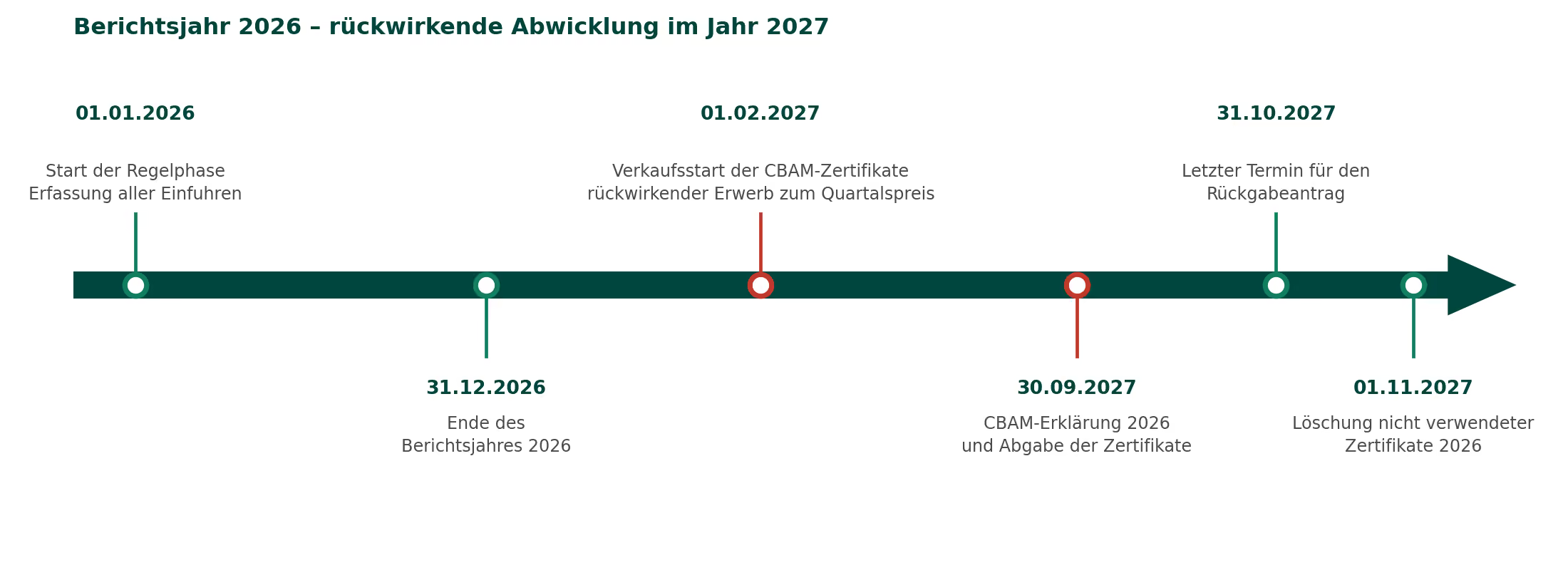
Figure 4: Deadlines for the 2026 reporting year (author's own illustration)
5.3 Timeline: The 2027 reporting year and subsequent years
From the 2027 reporting year onwards, the cycle becomes permanent. A new addition is the quarterly surrender obligation: certificates must be purchased and held in the CBAM account during the ongoing reporting year. The quantity of certificates to be held is based on 50% of the total emissions of the current calendar year, which must be purchased by the end of a quarter at the latest. It is important to clear up a common misunderstanding here: the first mandatory surrender under the 50% rule is not the first quarter. The deadline is always the quarter following the one in which the mass-based threshold is exceeded. Article (22a) of the CBAM Regulation states literally: "The authorized CBAM declarant shall comply with the obligation laid down in paragraph 2 by the end of the quarter following the quarter in which the mass-based threshold is exceeded." This means that if a declarant exceeds the 50-tonne limit in the first quarter of 2026, for example, they do not have to fulfill the 50% rule and hold certificates in stock for the first time on 31 March 2027, but rather on 30 June 2027. If they only exceed the 50-tonne threshold in the second quarter, they only need to have the certificates in stock by the end of the third quarter, and so on. The same applies to subsequent years.
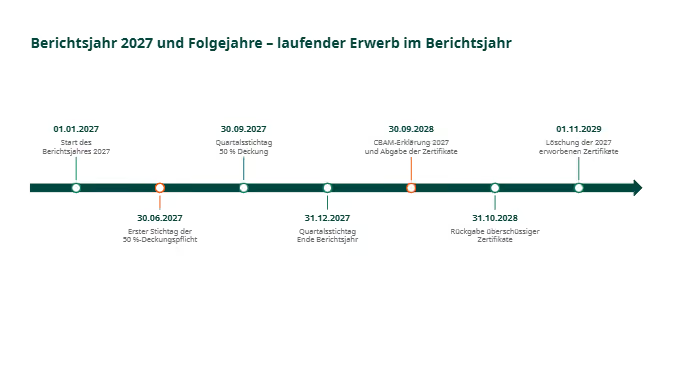
Figure 5: Deadlines for the 2027 reporting year and subsequent years (author's own illustration)
5.4 Overview of deadlines at a glance
6. CBAM certificates: Price, purchase, return, and expiration
6.1 Basic principle and price formation: Quarterly price for 2026, weekly price from 2027 onwards
One CBAM certificate corresponds to one tonne of CO₂ equivalent. Its price is not determined by a dedicated market but is modeled on the price of EU ETS certificates. A strict distinction must be made between two regimes: a quarterly price applies to the 2026 reporting year. Every import in 2026 is valued at the CBAM price of the quarter in which it occurred. The quarterly price is derived from the average of the closing prices on EU ETS trading days (clearing price). Starting with the 2027 reporting year, this will be replaced by a weekly price: the relevant figure will then be the average of the clearing prices from primary market EU ETS auctions during a calendar week, which will be published at the beginning of the following week and apply for that week. Secondary market prices are not included; since auction and secondary market prices typically deviate only minimally, the CBAM price follows the general CO₂ price level within Europe, albeit in a smoothed and time-delayed manner. For cost planning, this means that the EUA price is the primary cost driver, though short-term market spikes are mitigated.
The details regarding price determination and publication are governed by Implementing Regulation (EU) 2025/2548.
6.2 Operational purchasing via the central platform
Purchases will be made starting February 1, 2027, exclusively via a joint central platform established by the Commission and the Member States through a joint procurement process. According to the draft regulation presented in July 2026, the process is two-tiered: the purchase request is submitted in the CBAM registry (between 1 and 99,999 certificates per request), and payment is then processed via the platform—exclusively in euros. Once payment is confirmed, the certificates are deposited into the CBAM registry. A submitted purchase request cannot be changed, but it can be withdrawn before payment is made. A platform fee of 0.05 euros applies per certificate sold; no other fees are charged. Certificates are non-transferable and non-tradable—there is no secondary or futures market for CBAM certificates. However, it is possible to return mandatory purchased certificates once a year.
6.3 CBAM certificates for the 2026 reporting year
The 2026 reporting year will be processed entirely retroactively. Certificates for 2026 can only be purchased starting February 1, 2027. This leads to the most important difference compared to all subsequent years: there is no obligation for interim coverage during the year for 2026. The 50 percent rule will apply for the first time to imports in the 2027 reporting year.
The price is based on the quarter of import, not the quarter of purchase. The Commission sets the quarterly price as the average of the clearing prices for EU ETS certificates during that specific quarter. If you imported goods in the first quarter of 2026, you will purchase the required certificates in 2027 at the Q1 price, regardless of how the market has developed in the meantime. The price risk for 2026 is thus fixed; cost burdens become predictable as soon as the four quarterly prices are published.
Certificate prices for the 2026 reporting year:
For our own preliminary calculations, we use a planning range of 70 to 90 EUR per tonne of CO₂; political discussions regarding the EU ETS price may shift this range at short notice. Therefore, calculate your additional costs as a scenario rather than a fixed point value.
The following key points apply to the processing of the 2026 reporting year:
Purchase: Starting February 1, 2027, either in a single transaction or in multiple tranches; there is no minimum quantity requirement at any given time.
Submission: Due by September 30, 2027, along with the 2026 CBAM declaration.
Validity: Certificates purchased in 2026 can only be used for the 2026 reporting year and cannot be carried over to 2027.
Return: Application deadline is October 31, 2027; refunds are issued at the original purchase price.
Expiration: Unused certificates will be deleted on November 1, 2027 – without replacement or refund.
Practical recommendation
Do not purchase for 2026 until the emission data is reliable. Since there is no intra-year coverage obligation for 2026 and the quarterly price is fixed anyway, there is no price disadvantage to buying later—but there is a disadvantage to buying too early based on preliminary values, because only a portion of the certificates can be returned.
6.4 CBAM certificates from the 2027 reporting year: ongoing acquisition and the 50-percent rule
Starting with the 2027 reporting year, the mechanism changes fundamentally: purchases are made on an ongoing basis during the reporting year itself, at the weekly price valid at the time. This turns a deferred payment into an intra-year liquidity commitment.
Authorized CBAM declarants must hold certificates in their account at the end of each quarter, once the de minimis threshold has been exceeded, for at least 50 percent of the embedded emissions of all goods imported since the beginning of the year. Article 22 of the CBAM Regulation allows two methods for calculating this minimum balance: First, it is permissible to use published default values, plus the year-specific surcharge and taking into account free allocation. Second, it is permissible to refer to emissions already reported for previous reporting periods, which in most cases means the certificate requirement of the previous year—also taking into account free allocation. This creates an opportunity to use actual emission data. The first relevant cut-off date is June 30, 2027, as the obligation to purchase certificates only arises in the quarter following the quarter in which the 50-ton rule was exceeded. The remaining quantity required to meet the full surrender obligation can be procured by the certificate surrender deadline of September 30 of the following year.
Which of the two paths can be taken depends on the individual case. Those who already have verified actual data from the previous year will tie up significantly less capital with Option 2, because previous-year values are generally lower than default values. Those who are new importers or have changed their supplier plant will initially have to rely on default values.
The three quarterly cut-off dates for the 2027 reporting year are June 30, September 30, and December 31, 2027. The relevant figure is the balance at the end of each quarter, based on cumulative imports since January 1 of that year. For the first cut-off date on June 30, 2027, it should therefore be determined as early as January 2027 how the minimum balance is calculated and who will approve the budget—if necessary, initially based on relevant default values, which can be corrected downward once actual data becomes available later.
Important for financial planning
In 2027, two payment streams coincide: the retroactive procurement for the 2026 reporting year (by September 30, 2027) and the ongoing 50 percent coverage for the 2027 reporting year (starting June 30, 2027). Anyone who budgets for only one of the two will be caught off guard in the third quarter of 2027.
6.5 Returning excess certificates
Anyone who has acquired more certificates than they are required to surrender can request a buyback, albeit under strict conditions: only one buyback application is permitted per year, which cannot be changed or withdrawn once submitted. A prerequisite is the prior timely surrender of CBAM certificates by September 30. Furthermore, the quantity eligible for buyback is limited. Applications are bundled for the cut-off dates of April 1, July 1, and November 1 and approved by the competent authority within 42 calendar days. The buyback is executed at the original purchase price. Price gains or losses are therefore excluded. There is no fee for the buyback. Since not every certificate can be returned and the framework conditions for the timing of the return are clearly restrictive, it is advisable to purchase certificates in a way that avoids the need for a return whenever possible.
The return process is therefore a narrow valve, not a safety net. For the 2026 reporting year, the application deadline is October 31, 2027; for 2027, it is October 31, 2028—in each case, the deadline is October 31 of the year in which the certificates were required to be surrendered.
6.6 Deletion and expiration of unused certificates
Anything remaining in the CBAM account after surrender and return expires. All CBAM certificates purchased in the year prior to the preceding calendar year—meaning they are two years old—that have remained in a CBAM declarant's account are deleted on November 1 of each year. No refunds are provided.
Certificates purchased in the 2027 calendar year can therefore still be used for 2028 reporting, but they lose their validity on November 1, 2029. Certificates for 2026 form a separate group here (as explained above), as they can be used exclusively for 2026. Since CBAM certificates are generally neither transferable nor tradable, any excess quantity that is neither surrendered nor returned by the deadline represents a final expense. Purchasing conservatively and buying more if needed is therefore often more cost-effective than maintaining a safety buffer.
6.7 SEFA and the CBAM factor: gradual increase until 2034
The obligation to surrender certificates grows in parallel with the phase-out of free allocation under the EU ETS. The so-called SEFA (Specific Embedded Free Allocation) determines what proportion of embedded emissions must actually be covered by certificates. It therefore forms the basis for a type of discount during the initial years of the CBAM transition phase. The goal is to create an equivalent to the pricing in Europe, where full pricing is currently still distorted by the free allocation of allowances. Consequently, the effective cost burden is initially significantly lower than in subsequent years. However, SEFA will be phased out gradually until 2034, meaning costs will rise annually and eventually be passed on in full to CBAM declarants. This should, of course, be taken into account in CBAM cost estimates.
6.8 Deadlines for CBAM certificates at a glance
7. How are CBAM costs composed?
7.1 An overview of the key calculation metrics
In our daily consulting practice, we frequently encounter significant uncertainty regarding CBAM costs. This uncertainty is by no means limited to companies that have missed their reporting obligations and are now scrambling to address the requirements. Even companies that have submitted their Carbon Border Adjustment Mechanism (CBAM) reports on time from the very beginning are now facing a new challenge due to the financial burden of CBAM certificates.
7.2 The variables of the CBAM cost formula
The basic formula for calculating your CBAM costs is as follows:
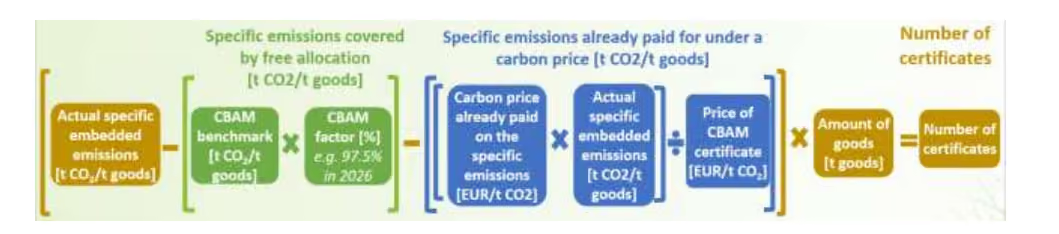
Figure 1: Representation by the Commission*

Figure 2: Our own simplified representation
Each of these variables therefore influences your CBAM costs. Below, we explain what lies behind the individual components – and where there are concrete starting points for optimization.
7.2.1 The reported emissions
Your CBAM emissions are the emissions embedded in your imports that are relevant to CBAM. It is important to note that not all emissions from your imported goods are actually relevant to CBAM. For example, indirect emissions (primarily electricity) are not applicable to goods such as steel and aluminum. However, the emissions caused by the production of precursors for your purchased products are in most cases relevant to CBAM. In principle, you are free to choose between actual data and default values.
Obtaining actual data is unfortunately complicated, but the effort is worth it! Even though you can rely on default values, these are generally set so high that using actual data will simply pay off. Furthermore, this variable is fundamentally the one with the greatest potential to reduce CBAM costs, because the fewer the emissions, the lower the number of certificates that need to be purchased. This variable is therefore the most important lever for lowering your CBAM costs.
7.2.2 The CBAM benchmark
A benchmark is a reference value that generally serves as a standard for measuring one's own performance. In the EU Emissions Trading System (EU ETS), which forms the basis for CBAM regulations, the benchmark is determined based on the top 10% of the respective production processes. These receive free allowances, creating an incentive for emission reductions. The CBAM benchmarks are derived from these EU ETS benchmarks.
The CBAM benchmark specifies how many emissions are discounted by the CBAM factor (discussed in the next section). Together, the CBAM factor and the CBAM benchmark form the Specific Embedded Free Allocation (SEFA), which is intended to be the CBAM equivalent of the EU ETS free allocation system. The benchmark value is always expressed in tons of CO2 equivalent per ton of goods.
There are two possible starting points for the CBAM benchmark or SEFA: either you use default emission values, in which case a standard benchmark must be used, or you use actual data, which requires calculating an independent, actual SEFA value. The key to this is applying the correct benchmark value to the respective production steps.
7.2.3 The CBAM factor
The CBAM factor acts as the actual corrective for the free allowances allocated under the EU ETS and will be gradually reduced until 2034. It is already defined and allows for a proportional reduction in the certificate costs to be paid. For example, a CBAM factor of 97.5% in 2026 means that out of 100 tons of CO2, only 2.5 tons would be priced. In simple terms, it is a discount.
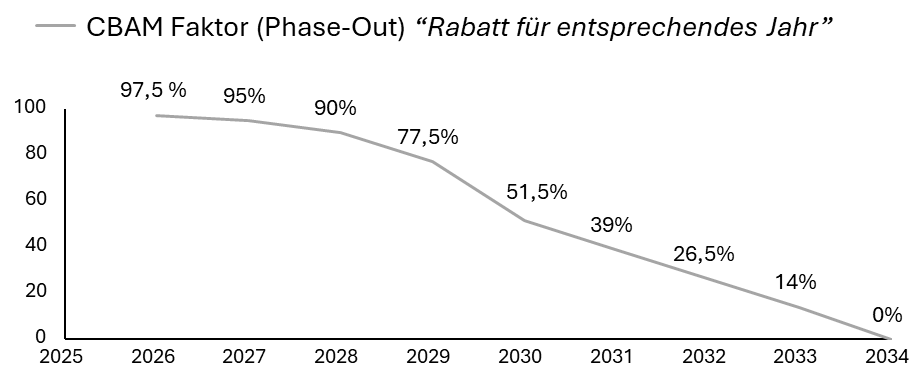
Figure 3: CBAM factor
However, this discount is put into perspective by the benchmark: emissions that exceed the benchmark value incur full costs. Consequently, the CBAM factor loses significant weight for many goods from the outset.
7.2.4 Carbon Price Paid / Carbon Price Due
This variable reflects the CO2 costs already paid in other countries. To avoid double pricing, such amounts are credited against the CBAM obligation. While carbon pricing mechanisms do not exist everywhere in the world, there are certainly relevant examples.
The European Commission plans to publish default values for the Carbon Price Due to minimize the administrative burden on companies. However, these default values will be set as low as possible. This means the value is calculated by taking into account all potential discounts and subsidies available during the respective period. As a result, the value is kept to a minimum, which limits the credit available to CBAM declarants. Manufacturers do, however, have the option to prepare documentation regarding the actual price paid and have this verified alongside their emissions data. If successful, CBAM declarants may benefit from higher credits.
7.2.5 EU ETS Price / Carbon Price Due
The price of CBAM certificates is based on the clearing prices in the EU ETS. We have already discussed the exact price formation above. It should be noted once again: CBAM costs can potentially be reduced here, or costs could rise significantly due to this variable. The reason is simple: EU ETS prices are volatile. Within a single quarter, there can be fluctuations of 30 EUR per certificate, ranging from 60 EUR to 90 EUR. Depending on when CBAM declarants purchase certificates, there can be significant cost differences. This risk can be eliminated by holding certificates. With well-thought-out strategies, most risks can be mitigated even without capital investment. However, we strongly advise against speculating on rising or falling prices.
7.3 Chart: Calculation example for determining the number of CBAM certificates

Calculation example for determining the number of CBAM certificates
Source: German Emissions Trading Authority (DEHSt) at the Federal Environment Agency
7.4 Example calculation: Actual data vs. default values
The variables above are best understood through a worked example. We have deliberately used the same import twice—once with verified actual data and once with default values. The difference represents the true value of any communication with manufacturers.
Initial scenario
Goods: Steel screws, CN 7318 15 20
Country of origin: China
Import volume: 1,000 tonnes per calendar year
CBAM benchmark: 1.364 t CO₂e/t
CBAM factor 2026: 97.5 percent
Assumed certificate price: 80.00 EUR/t CO₂e
Emission value actual data (verified): 2.17 t CO₂e/t
Emission value default 2026 (incl. 10 percent surcharge): 7.013 t CO₂e/t
Option A – Verified actual data
(2.17 − (1.364 × 97.5%)) × 1,000 t × 80.00 EUR = 67,208.00 EUR
Option B – Default values
(7.013 − (1.364 × 97.5%)) × 1,000 t × 80.00 EUR = 454,648.00 EUR
Result for the 2026 reporting year
The difference is 387,440.00 EUR – for a single customs tariff number, a single supplier plant, and an annual volume of 1,000 tons. This compares 67.21 EUR per ton of goods against 454.65 EUR. In this case, obtaining verified actual data reduces CBAM costs by approximately 85 percent.
The gap widens in subsequent years for two reasons. First, the CBAM factor decreases, meaning the free allocation as a deduction item is gradually phased out – this affects both variants. Second, the surcharge on standard values increases from 10 percent (2026) to 20 percent (2027) and finally to 30 percent (from 2028 onwards); as a result, the standard value rises from 7.013 to 8.288 t CO₂e/t, while the actual data value remains constant.
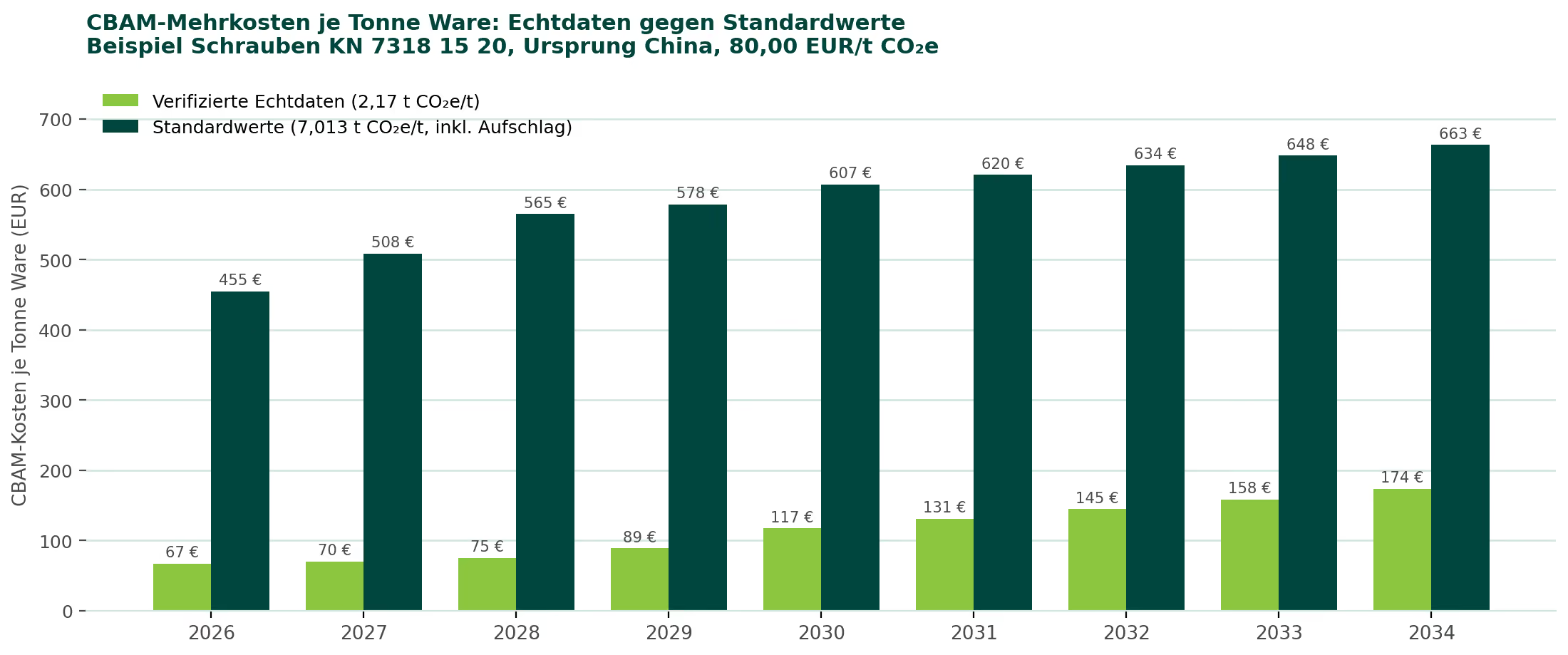
Figure 6: Comparison of additional CBAM costs per ton of goods (internal calculation, simplified representation)
Over the entire period from 2026 to 2034, the difference adds up to approximately 4,250 EUR per ton of goods. With a constant annual volume of 1,000 tons, this amounts to over four million euros.
This calculation is intentionally simplified: it uses the benchmark from column B (standard benchmark – not permitted for actual data), assumes a constant certificate price, and ignores any CO₂ price paid in a third country. Furthermore, the actual emissions dataset requires a well-verified supply chain, which will be challenging in the initial years. We would be happy to perform this calculation for your specific customs tariff numbers, countries of origin, and quantities.
What this means for you—let's talk
We calculate your additional CBAM costs for both scenarios based on your actual import data and show you which supplier plants offer the fastest return on investment for obtaining actual data.
7.5 Provisions and liquidity
In 2026, the obligation arises economically with the import, but payment is not made until the following year. For the annual financial statements, provisions must therefore be made based on import volumes, the best available emission values, and the expected certificate price—taking into account the CBAM factor for the respective reporting year. In terms of liquidity, the rhythm must be observed: from 2027, the quarterly 50% coverage will tie up capital during the year, with the remaining payment concentrated in the third quarter of the following year.
8. CBAM in the company: Processes, roles, and controls
CBAM is a cross-functional task involving customs, procurement, sustainability, and finance. A clear division of roles has proven effective: the customs or foreign trade department is responsible for classification and volume data, procurement for manufacturer communication and contractual cost allocation, and the finance department for provisions, liquidity, and certificate procurement. The data basis—typically consolidated from customs declarations and supplier data—should be secured via an internal control system: volume reconciliations between source data and the declaration file, four-eyes approvals before any submission, and an audit-proof filing system for all supporting documents beyond the four-year audit period.
The roadmap in Chapter 10 shows how these roles are specifically distributed across the individual work steps.
9. Sanctions, fines, and consequences for CBAM authorization
The sanctions are significant: for every certificate not submitted on time, there is a fine based on the EU-ETS penalty level (approx. 100 EUR per certificate)—the surrender obligation itself remains in effect. The catalog of sanctions also provides for penalty payments of 3–5 times the certificate price for each unsubmitted certificate. Stricter sanctions are provided for imports without authorization and for circumvention schemes; the Omnibus Regulation has also strengthened monitoring and anti-circumvention rules. Furthermore, compliance violations can jeopardize the CBAM authorization itself.
The system can be categorized into three stages.
First stage: Violations of the surrender obligation.
Those who do not submit the required certificates by September 30th will pay the specified amount for each missing certificate. This sanction is in addition to the surrender obligation, not a replacement for it: the certificates must still be purchased and surrendered. Those who fail to meet the 50 percent coverage requirement during the year also risk sanctions; the amount is calculated based on the shortfall.
Second stage: Import without authorization.
Anyone who releases CBAM goods for free circulation without the status of an authorized CBAM declarant must expect a penalty of three to five times the base amount. Factors considered include, in particular, the duration and severity of the violation, the quantity imported, the willingness to cooperate, and whether it is a repeat offense.
Third stage: Circumvention.
The regulation explicitly covers arrangements whose primary purpose is to avoid CBAM. This includes the artificial splitting of shipments or imports across multiple companies to stay below the 50-ton threshold, the targeted redirection of low-emission batches to the EU while supplying emission-intensive goods to other markets (resource shuffling), and minor processing steps in third countries solely for the purpose of changing the Combined Nomenclature code. The Commission may extend the scope in such cases.
The most severe practical consequence is not the fine, but the loss of authorization. Without the status of an authorized CBAM declarant, CBAM goods can no longer be released for free circulation. For an importer whose product range is based on steel or aluminum goods, this is equivalent to an import ban. The competent authority—in Germany, the DEHSt at the Federal Environment Agency—can review the authorization, impose conditions, adjust the security deposit, or revoke the authorization.
Declarations can be audited until the end of the fourth year following the reporting year. A violation from the 2026 reporting year can therefore be addressed as late as 2031. Maintaining an audit-proof filing system for all manufacturer data, verification reports, and calculation records beyond this period is therefore not just a formality, but your line of defense.
10. Roadmap for affected companies
The preceding chapters provide a work plan that goes beyond a mere list of regulatory requirements. The following roadmap is structured as a guide for action: it specifies what needs to be done for each step, who is typically responsible within the company, and the deadline by which the step should be completed.
10.1 Who is involved in the company
CBAM is a cross-functional task. In companies where implementation runs smoothly, responsibilities are assigned early and in writing. The following role distribution has proven effective:
10.2 The eleven steps to CBAM compliance
10.3 What we can handle for you
None of the steps in this roadmap need to be handled internally. CBAM-Estimator GmbH can take over the entire CBAM process or specific parts of it—depending on where you lack capacity.
Impact analysis: We cross-reference your import item master data with the CBAM goods list to determine quantities, origins, and threshold risks.
Authorization application: We prepare the application as an authorized CBAM declarant and manage the process with the DEHSt.
Manufacturer communication: We contact your production plants in their local language, explain the calculation methodology, and collect data in a structured format.
Emissions calculation: We calculate embedded emissions, including precursors, and assign the correct benchmarks and SEFA values.
Cost forecasting and scenarios: Our web app forecasts your CBAM costs over the entire phase-out period and compares suppliers and countries.
CBAM declaration: We generate the compliant XML report and prepare it for submission in the CBAM registry.
Certificate management: We determine your certificate requirements, monitor quarterly deadlines, and track return and expiration dates.
Book a consultation
In a 30-minute call, we will clarify how you are affected, the key deadlines, and the expected cost impact. Upon request, we can provide a brief live demo of our software solution.
Maximilian Jung · Managing Director · CBAM-Estimator GmbH
Bauernwaldstraße 155 · 70195 Stuttgart
Phone +49 176 32603266 · max.jung@cbam-estimator.com
Book an appointment and find more information at: www.cbam-estimator.com
11. Product group expansion from 2028
11.1 Status of the legislative process
The expansion of the CBAM to downstream products in the steel and aluminum industry is now in an advanced legislative process with concrete lists of goods. The current status is as follows:
17.12.2025: The Commission presents its proposal to expand the scope to around 180 downstream products.
03.06.2026: The Council Presidency presents a compromise text covering around 200 products. This primarily includes machinery, vehicle components, household appliances, construction supplies, and metal products.
01.01.2028: Planned entry into force, combined with an annual review clause for the inclusion of further products.
Additionally planned: stricter proof requirements against resource shuffling for particularly high-risk combinations of product and country of origin.
The final list of goods remains subject to change until the process is concluded. However, the direction is clear, and experience shows that the lead time for data processes and supplier communication is twelve to eighteen months. Those who wait until 2028 to start are starting too late.
11.2 Affected customs tariff numbers
The following overview summarizes the published CN code expansions in the steel and aluminum sector:
The jump in the depth of the value chain is striking: it no longer covers only raw materials and simple semi-finished products, but finished capital and consumer goods. This makes data management even more challenging: the embedded emissions of an industrial robot result from a much more complex upstream supply chain, which is significantly more time-consuming to track than a shipment of coils.
11.3 What this means for mechanical engineering, metal products, and wholesale
Mechanical engineering. Previously, the mechanical engineering sector was primarily affected indirectly through raw materials like steel and aluminum. From 2028, the finished machine itself will fall within the scope. Companies that source assemblies or complete machines from third countries and only perform assembly or configuration in Europe are particularly exposed. For this scenario, the following applies: the embedded emissions of the entire upstream supply chain must be verified, and without verified factory data, the default value will be applied to the entire machine.
Manufacturers of metal products. Fittings, containers, grids, fences, caps, and lids are currently just outside the scope but will move into it in 2028. Anyone importing these products or purchasing them as raw materials for their own production should map their article master data against the proposed codes now. At the same time, this creates an opportunity: European manufacturing will become relatively more cost-effective compared to imports from emission-intensive countries of origin.
Wholesale. For the wholesale sector, this expansion is the most drastic change. It is typical to have broad product ranges in small batch sizes from many countries of origin. Because the 50-ton threshold is calculated based on the net mass of all CBAM goods combined, traders who are currently safely below the threshold will frequently exceed it with this expansion. At the same time, the number of supplier plants from which emissions data must be obtained will multiply. This cannot be managed without structured data collection.
Recommendation for all three segments
Map your article master data against the proposed CN codes as early as 2026, prepare your supplier communications, and anchor CBAM clauses in new purchasing contracts. We will handle the reconciliation and provide you with a reliable impact assessment list for 2028.
12. UK CBAM: The British border adjustment from 2027
The United Kingdom is introducing its own CO₂ border adjustment on January 1, 2027. For companies importing into both the EU and Great Britain, this creates a second, similar, but not identical set of obligations. The following comparison summarizes the most important differences.
For internationally active companies, this results in four practical consequences. First, two separate impact assessments are required because the thresholds are defined differently—by weight in the EU CBAM and by value in the UK CBAM. A company may be affected by one system but not the other. Second, the key dates differ: UK registration does not begin until January 1, 2028, but records must be kept starting from the first import in 2027. Third, while the emissions data are methodologically designed to be compatible, they are not identical—particularly because indirect emissions are initially excluded in the UK. Fourth, a CO₂ price paid in a third country is deductible in both systems, but subject to their own respective proof requirements.
In the medium term, this double burden could be eased: the EU and the UK have agreed to link their emissions trading systems. However, this is likely to take several years. Once this takes effect, goods covered by the agreement should be mutually exempt from the respective border adjustments. Until then, both systems must be complied with separately.
Note
The UK regulatory framework will be further refined before its launch. Individual detailed regulations—particularly regarding default values, proof requirements for foreign CO₂ prices, and penalty levels—had not yet been definitively published at the time of going to press.
13. Outlook: Where the CBAM is heading
The CBAM was designed from the outset with a phased expansion in mind. Furthermore, the EU is specifically aiming for the EU CBAM to trigger developments in third countries. Three lines of development deserve particular attention. First, the expansion of the scope to include downstream steel and aluminum products as of January 1, 2028; importers of processed metal products that currently fall just outside the scope will be covered for the first time (see Chapter 11 for details). Second, the international dimension: The United Kingdom is introducing its own CBAM on January 1, 2027, designed as a levy model without certificates (see Chapter 12); at the same time, the EU and the UK have agreed to link their emissions trading systems, which is expected to exempt associated goods from the respective border adjustments in the future. Other countries, such as Turkey, may potentially follow a similar path. Third, the fiscal revenue perspective: CBAM revenues are being discussed as a future source of EU own resources; the draft platform regulation already contains a review clause for this purpose.
For business practice, this means: CBAM compliance is not a project with an end date, but a permanent process with evolving regulatory foundations. Those who establish robust data processes, supplier relationships, and cost management today will be able to handle future expansion phases without disruption.
14. About CBAM-Estimator and Legal Disclaimer
CBAM-Estimator GmbH, based in Stuttgart, supports importing companies throughout the entire CBAM process: from impact analysis, emissions data collection, and manufacturer communication to declaration preparation, certificate management, and ongoing regulatory monitoring. Our software and consulting services are tailored to the needs of medium-sized importers—with clear processes, auditable data, and personal support. Please contact us if you would like assistance with any part of this roadmap.
Your contact person
Maximilian Jung · Managing Director
CBAM-Estimator GmbH · Bauernwaldstraße 155 · 70195 Stuttgart
Phone +49 176 32603266
max.jung@cbam-estimator.com · contact@cbam-estimator.com
www.cbam-estimator.com
Legal Disclaimer: This guide reflects the legal status as of August 2026, including the draft Delegated Regulation on the central sales platform (Ref. Ares(2026)6860249), which has not yet been formally adopted; individual detailed regulations may change during the further process. This guide is for general information purposes only and does not constitute legal or tax advice in individual cases.
Appendix: List of Legal Sources
The CBAM regulatory framework consists of the basic regulation and a series of implementing and delegated acts. The following overview lists the essential sources for practical application.
In addition, the default values published by the European Commission for each good and country of origin, as well as the CBAM benchmark values for each CN code, must be used. Both are subject to ongoing updates; the default values will be reviewed by December 2027.