Lorem ispum dolor sit amet
Aliquip velit do aliquip cillum proident laboris et cupidatat in ad laborum magna veniam.


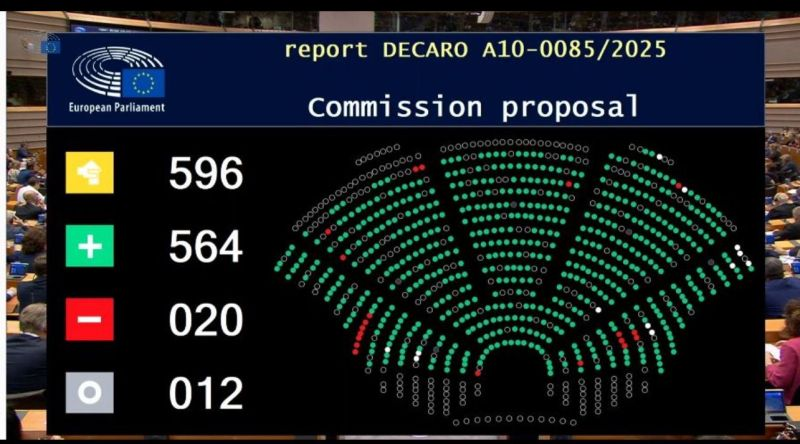
The long-awaited European Parliament vote on CBAM is finally here. On May 22, 2025, members of the European Union's legislative body voted by an overwhelming majority in favor of the European Commission's Omnibus Reform Initiative. The reform agenda has its roots in Parliament, but its approval initially seemed uncertain, as the majority ratios in a Parliament with its many fragmented factions are anything but easy to organize. However, yesterday's vote shows a broad cross-party consensus for a reform of CBAM.
What was Omnibus again?
Omnibus is the name of a reform package for the EU Green Deal. CBAM is one of the Green Deal packages and, as such, is also targeted by the Omnibus reform agenda. Besides CBAM, there are other parts of the Green Deal affected by Omnibus. These were not voted on yesterday and are not the subject of this article. For more detailed information about Omnibus and CBAM, feel free to read our article series (https://www.cbam-estimator.com/cbam-checklisten/). You can also find an overview of the most important aspects of the Omnibus package for importers in the following table.
Did Parliament adopt Omnibus as planned, or are there changes?
Parliament has adopted Omnibus without changes. Some might have wished for more extensive relief, but for all companies affected by CBAM, this is nonetheless positive news. After all, the final CBAM regime will also begin with Omnibus reforms in just a few months. There is an urgent need for legal certainty, as highlighted by the many questions companies have raised about Omnibus in recent months. Planning security is now urgently required.
So is Omnibus definitely coming now?
The short answer is no. The legislative process is not yet complete; the national states in the Council still need to give their approval. In this case, however, this is likely more than a theoretical possibility of failure. Several national governments have already announced their support for Omnibus, including the new federal government, which even included it in its coalition agreement. Furthermore, the broad cross-party support in the European Parliament has made it clear: there currently seems to be no political force in Europe that wants to bring about the failure of the reform agenda. To finally establish legal certainty, however, formal approval is still required. The Council, Parliament, and Commission aim to agree on the final legislative text by the end of June, and the regulation will subsequently be published in the Official Journal. Once that happens, there will finally be clarity—we will report on it again then.
What else you need to know now
The EU expert group tasked with CBAM has published revised schedules for the further development of CBAM. This includes the announcement that the list of customs tariff numbers affected by CBAM will be expanded in the fourth quarter of this year. It was already known from the Steel Action Plan that the Commission intends to initially target downstream products of the steel and aluminum industry. This has now been confirmed: it is likely that, effective next year, primarily eight-digit codes will be included in CBAM. While a final list does not yet exist, you can already get an overview of your customs tariff numbers.
What does this mean for my preparation for the definitive CBAM regime?
Omnibus is therefore likely to happen, so please take another look at the contents of the reform agenda and start recalculating your supply chains with regard to price increases caused by CBAM. We are happy to support you with the appropriate expertise whenever needed. Furthermore, have you already developed a solution for managing CBAM certificates? While the certificate regime will not start until 2027 with Omnibus, you will then have to purchase your certificates for 2026 retroactively. The right time to develop a solution is now. We are also happy to support you with this challenge!
Do you import less than 50 tons of CBAM goods and are wondering whether you still need to apply for "Authorized CBAM Declarant" status? First, check your other customs tariff numbers for eight-digit codes; if you are still significantly below the 50-ton-per-year de minimis threshold for CBAM goods, it is likely a justifiable business risk to wait for the further progress of Omnibus until the end of June. If you find that you exceed the 50-ton limit with the potential new codes, you should submit the application promptly—you will need the status soon anyway. We can, of course, support you with this as well!
About author
Maximilian Jung
Geschäftsführer
Maximilian Jung ist Geschäftsführer und Mitgründer der CBAM-Estimator GmbH. Nach seinem Studium der Volkswirtschaftslehre an der Goethe-Universität Frankfurt gründete Maximilian Jung die CBAM-Estimator GmbH, um Unternehmen dabei zu unterstützen, ihre CBAM-Verpflichtungen durch individuelle Softwarelösungen schnell und einfach zu erfüllen.