Lorem ispum dolor sit amet
Aliquip velit do aliquip cillum proident laboris et cupidatat in ad laborum magna veniam.



CBAM represents an extension of the European Emissions Trading System (ETS). Therefore, the certificate regime should be at the heart of any considerations regarding CBAM. However, as the certificate regime has not yet been implemented, the Commission has not been able to carry out any validation. Nevertheless, several reform proposals have been presented. In some cases, these can be seen as a consequence of reforms in other areas, while in others they represent an attempt to remove certain hurdles for companies in advance. These steps are briefly explained below.
CBAM certificate management
The current CBAM regulation provides for two rules which, when combined, could easily lead to a major problem:
- Importers must purchase CBAM certificates for at least 80% of the emissions they import during a quarter by the end of that quarter. The requirement is determined based on default values.
- A maximum of one-third of the certificates purchased in a year can be repurchased
It is therefore easy to see that there is a significant risk that some importers will purchase too many certificates and subsequently be left with them without ever needing them. To prevent this, the Commission has now put forward the following proposal:
- Only 50% instead of 80% coverage.
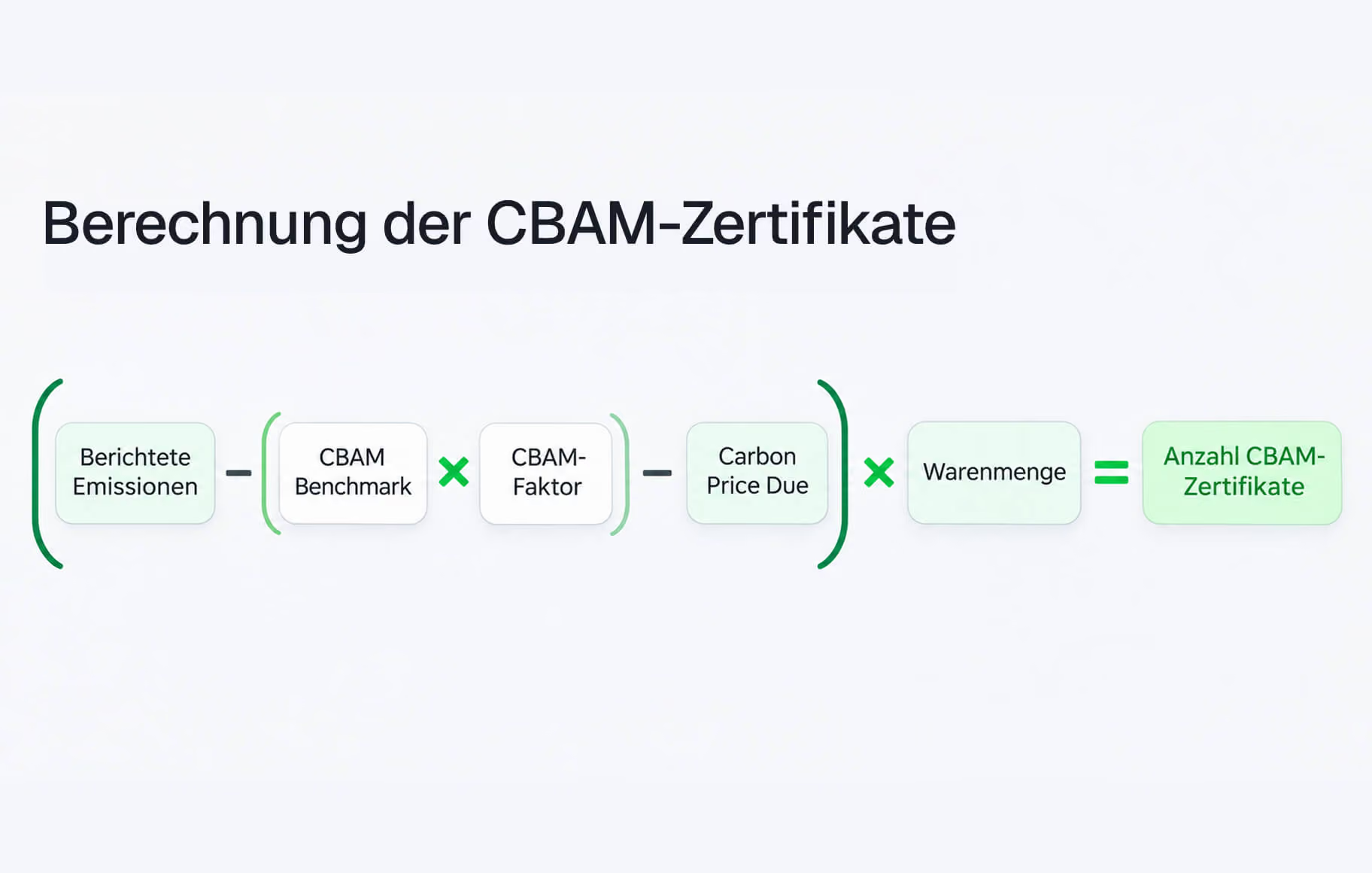
- New calculation basis for certificate requirements: a) Option 1: Use of public default values (deducting the surcharge[1] and the corresponding allocation[2]). b) Option 2: Previous year's data as a basis.
- New repurchase limit: a) All certificates that a declarant was required to purchase under the regulation can be resold. b) must apply to the same year as the year of acquisition (and not, as currently planned, to the previous year).
The goal is to provide companies with more liquidity and to increase planning security through clearly estimable variables in the calculation basis for certificate requirements.
Sales start in 2027
Regarding the originally planned start of certificate sales in 2026, the Commission notes the following initial problems: There is still uncertainty in many companies regarding emission levels, meaning many importers are not sufficiently prepared. The Commission also intends to reform other aspects of trade in parallel (see above), which could coincide with the start of certificate purchasing, inevitably leading to chaos.
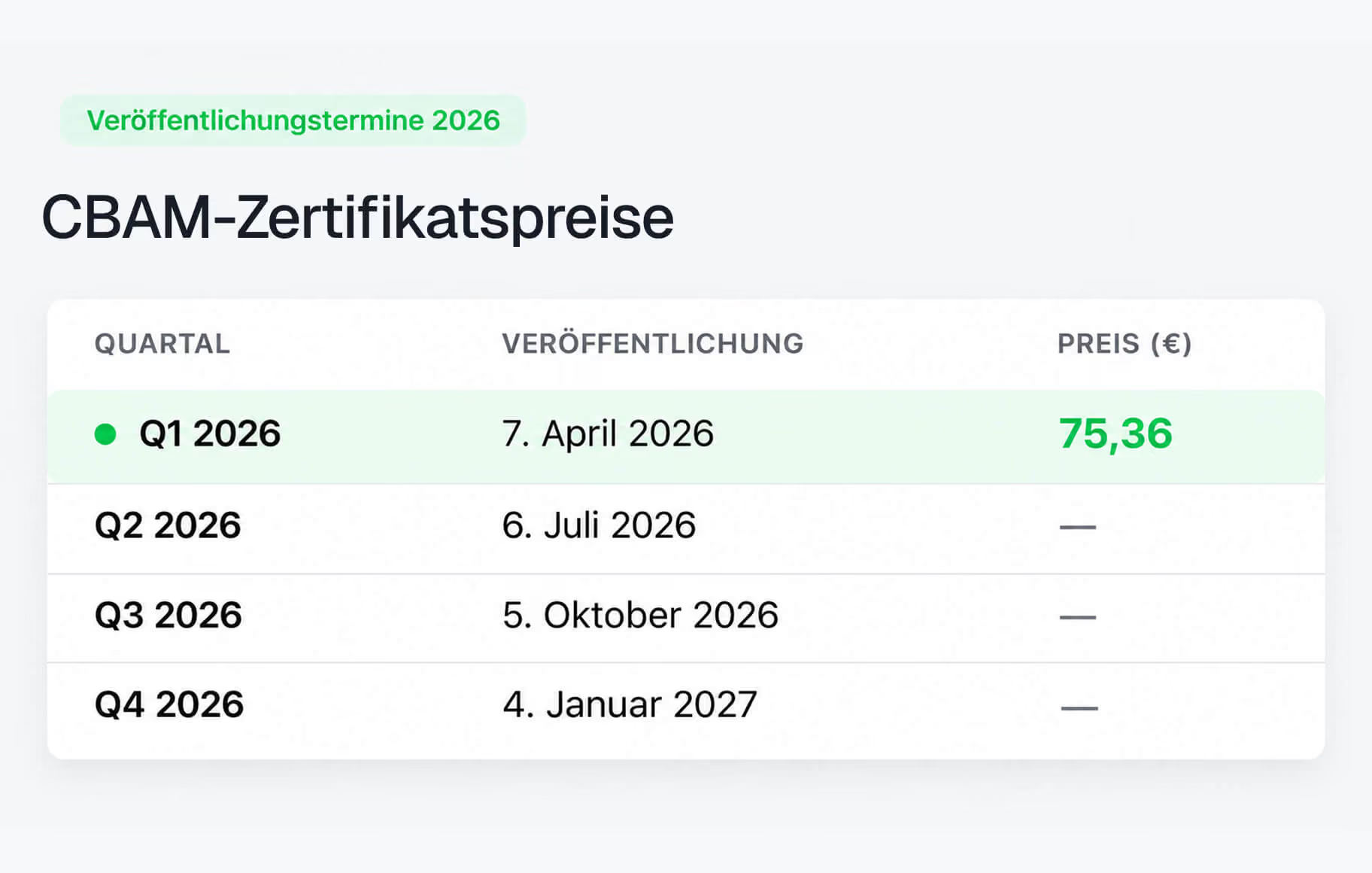
Therefore, the Commission is now proposing a special regime for 2026: the start of sales would be postponed to February 1, 2027, although importers would then have to purchase certificates retrospectively for 2026. The price will then be calculated by the Commission in 2027 on the basis of the quarterly average closing prices of EU ETS allowances for the quarter in which the CBAM goods corresponding to the emissions were imported. In other words, the corresponding price for goods in 2026 will be calculated retroactively in 2027. The basis for calculating the certificate price remains unaffected by this proposal. Importers will therefore be able to calculate the relevant pricing as early as 2026.
Other innovations/default values for carbon prices paid in third countries
The Commission is also pursuing the idea of creating optional default values for carbon prices incurred outside Europe to avoid a lengthy and complex proof requirement for importers. These could then be incorporated into CBAM reports, similar to the default values for emissions. There is also to be a change in communication regarding the cancellation of certificates between the CBAM portal and the CCP portal. This is merely a formal step between authorities and has no relevance to the daily work of importers.
Conclusion
The changes to the CBAM certificate management regime are to be welcomed. The Commission has recognized the real risk that companies may have to tie up large sums of money throughout the year and has opted for a solution that allows for more liquidity. The danger now would be that there are broad incentives for speculation with CBAM certificates. However, this is largely negligible due to the coupling of CBAM certificates with EU ETS certificates. Furthermore, companies must ensure they factor the start of certificate purchasing, which has been postponed to 2027, into their 2026 planning; otherwise, they face an unexpected additional burden in 2027. Nevertheless, the postponement of certificate purchasing is positive, as it provides much-needed preparation time for many importers in light of the upcoming CBAM reforms.
[1] There will be a markup on default values to incentivize companies to determine actual data.
[2] CBAM is being phased in alongside the phase-out of free ETS allowances.
About author
Maximilian Jung
Geschäftsführer
Maximilian Jung ist Geschäftsführer und Mitgründer der CBAM-Estimator GmbH. Nach seinem Studium der Volkswirtschaftslehre an der Goethe-Universität Frankfurt gründete Maximilian Jung die CBAM-Estimator GmbH, um Unternehmen dabei zu unterstützen, ihre CBAM-Verpflichtungen durch individuelle Softwarelösungen schnell und einfach zu erfüllen.