Lorem ispum dolor sit amet
Aliquip velit do aliquip cillum proident laboris et cupidatat in ad laborum magna veniam.



A milestone in EU environmental policy
The European Commission has finally published the long-awaited default values for calculating CO2 emissions. This development marks a decisive moment in EU environmental policy, as the Carbon Border Adjustment Mechanism (CBAM) now enters a critical phase. CBAM represents an innovative approach to addressing the challenges of climate change while ensuring fair competition in international trade.
The role of default values in the CBAM transition period (2023–2025)
The introduction of CBAM is taking place in stages, beginning with a transition period from October 1, 2023, to December 31, 2025. This phase is primarily intended to collect data and experience and to optimize processes for the subsequent implementation phase. No financial adjustment payments are required during this transition period.
Use of default values in the first quarterly reports
In the first three quarterly reports, i.e., from October 1, 2023, to June 30, 2024, companies can rely on default values if actual emission data is unavailable. This flexibility applies in particular to the calculation of indirect emissions. On December 22, 2023, the EU Commission published default values that represent a global average based on production volumes, sorted by commodity group according to the CN code.
Limitations and reporting obligations
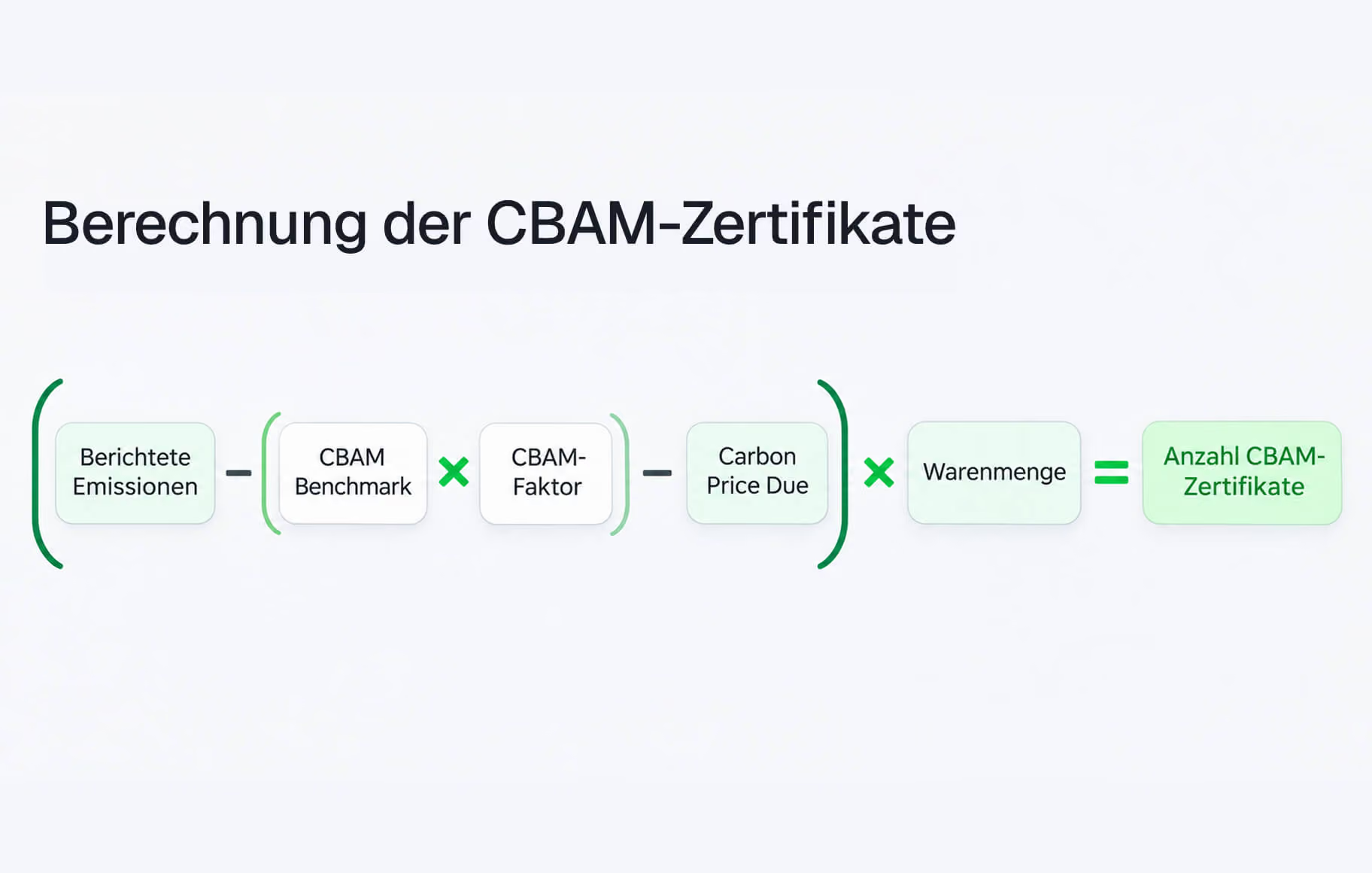
After June 30, 2024, companies may estimate up to 20% of emissions for complex goods, with default values serving as estimates. This regulation applies until the end of the transition period on December 31, 2025. All importers are required to prepare and submit quarterly CBAM reports. These reports must include the total quantity of each type of good, the total actual emissions, and the carbon prices paid in the country of origin. The use of default values as an alternative is permitted until June 30, 2024.
The role of default values in the CBAM pricing phase (from 2026)
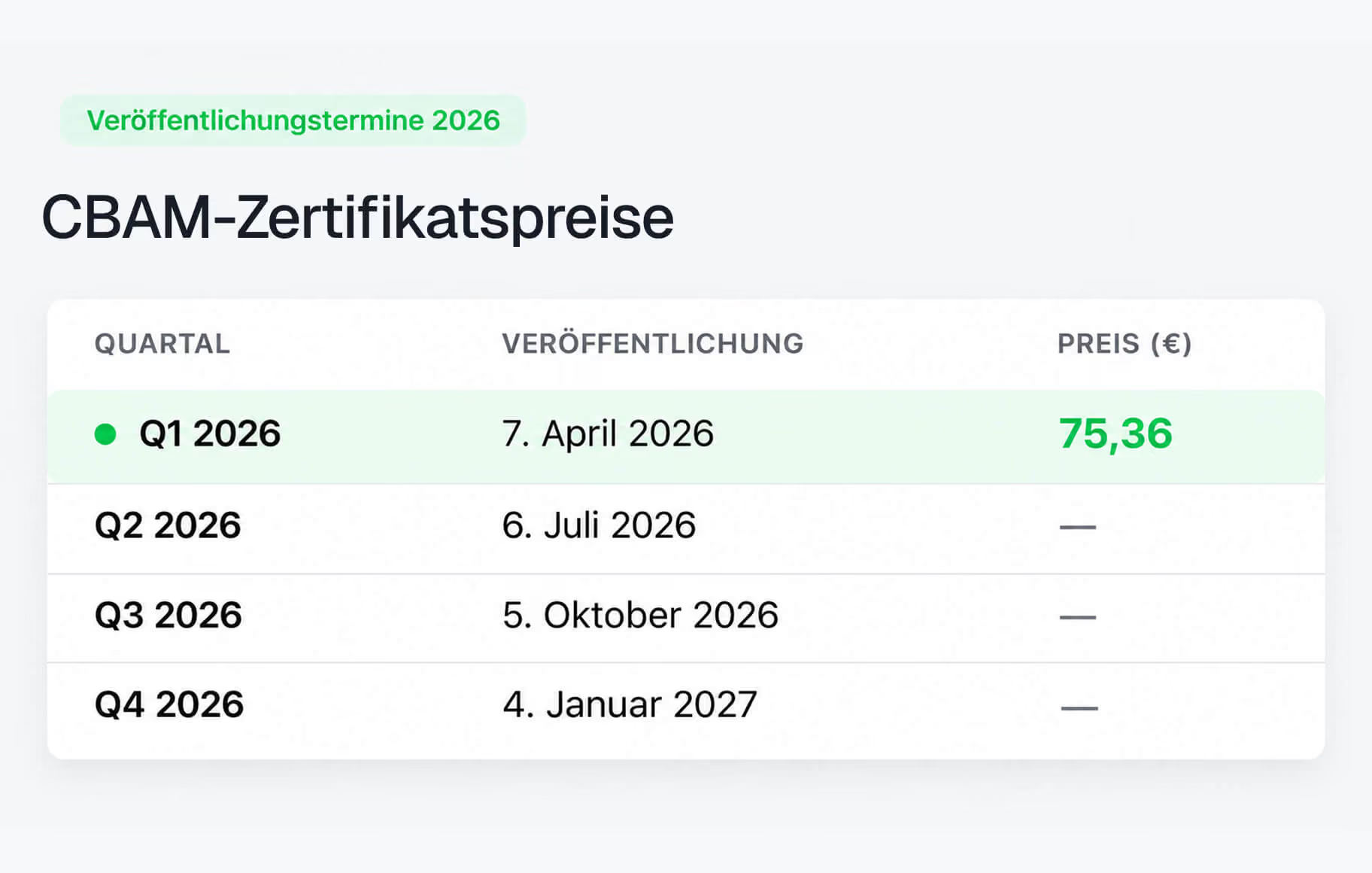
The CBAM pricing phase begins in 2026, during which importers must purchase certificates, the costs of which are based on the price of EU ETS certificates at the time of import. This phase introduces pricing for greenhouse gas emissions generated during the production of imported goods.
For the implementation phase starting in 2026, there will be new default values determined individually for each export country. The EU Commission plans to publish these values in 2025. These new default values will allow for adjustments to the specific emission profiles of different export countries, thereby providing a more accurate calculation of CBAM costs for importers.
Fundamentals of emission calculation in CBAM: A complex procedure
Calculating emissions under the Carbon Border Adjustment Mechanism (CBAM) is a complex and multi-layered process that is essential for accurately determining the environmental impact of imported goods. It forms the foundation upon which CBAM is based and is crucial for achieving its goals in climate protection and fair trade.
Importance of accurate emission calculation
Correctly calculating CO2 emissions is of great importance, as it has a direct impact on costs for companies while ensuring that the EU's environmental policy goals are met. Precise emission calculation promotes the transparency and credibility of CBAM by ensuring fair treatment for all parties involved and minimizing distortions in international trade.
Challenges in emission calculation
The greatest challenge in emission calculation lies in the diversity and complexity of production processes and the associated emissions. Different industrial sectors and production methods lead to a wide range of emission profiles that must be assessed individually. The availability and accuracy of emission data, particularly in third countries, is another hurdle that must be overcome.
Methods of emission calculation
Calculating emissions under CBAM can be based on various methods, depending on the type of good, the production process, and the availability of data. These methods range from using specific emission data from production facilities to standardized approaches that use average values for specific product categories or regions.
Consideration of different types of emissions
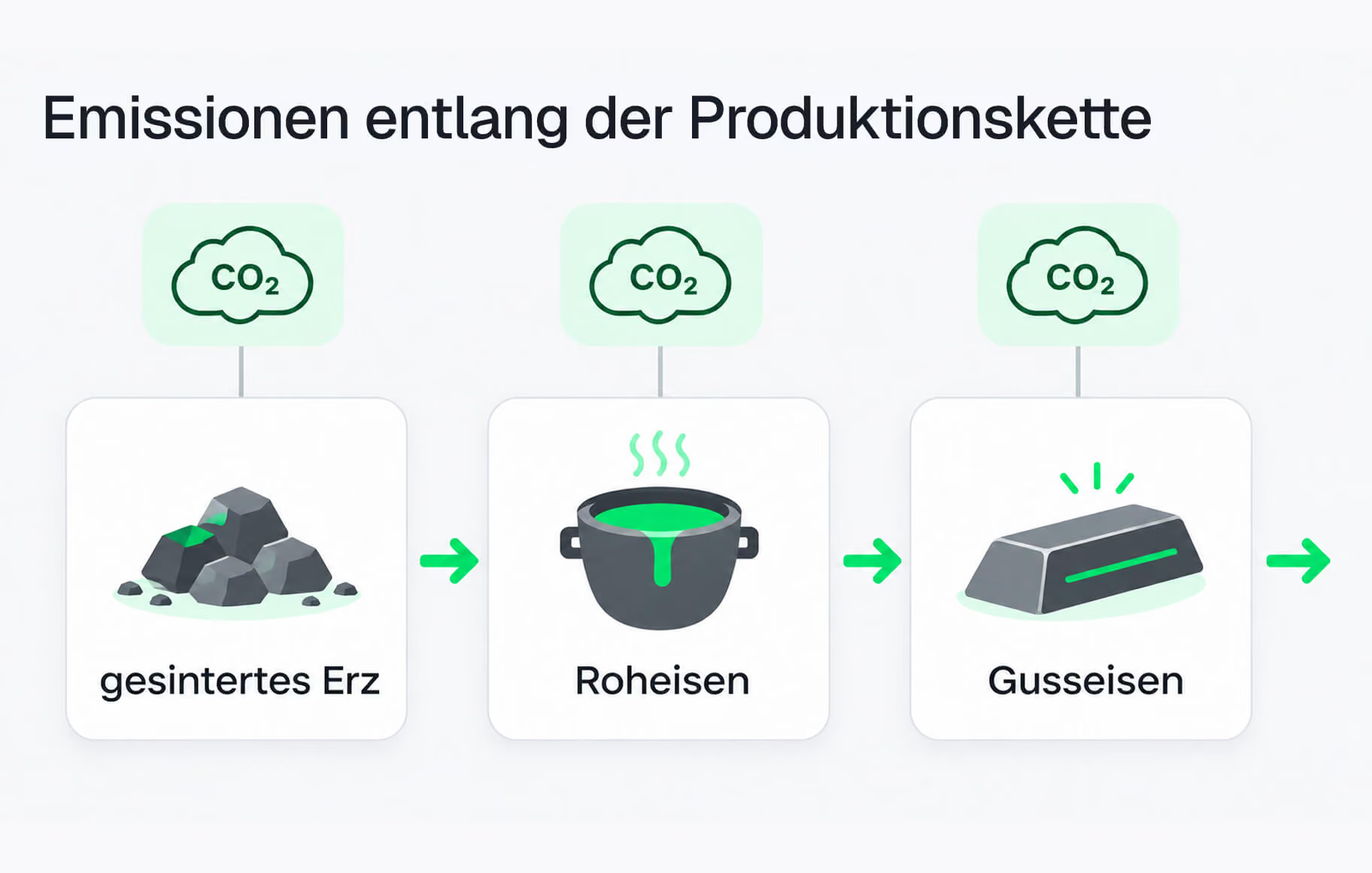
CBAM requires the consideration of various types of emissions, including direct emissions released during production and indirect emissions generated during energy supply. Additionally, emissions resulting from the manufacture of precursor products, as well as so-called embedded emissions—which encompass both direct and indirect emissions—must be included.
Direct emissions from CBAM goods (excluding electricity)
Calculating direct emissions for the production of non-electricity goods is complex. The specific emissions (tCO2e / t product) of the production facilities must be determined and multiplied by the quantity of imported goods. If precise data is unavailable, EU Commission default values may be used within certain limits. These global average values are based on the emission and production data of the EU's key trading partners.
Indirect emissions from CBAM goods (excluding electricity)
For indirect emissions from electricity consumption during production, default values for the electricity emission factor (tCO2e / kWh) are used. These values correspond to the average emissions per unit of electricity in the country of origin's power grid, based on data from the International Energy Agency (IEA).
Emissions from imported electricity
For imported electricity, default values for the CO2 emission factor (tCO2e / kWh) are used. These values are set as a weighted average of the CO2 intensity of electricity from fossil fuels in the country of origin and can be adjusted based on the best available data for CO2 emission factors in a third country, a group of third countries, or a region within a third country.
The importance and use of default values
Default values play a crucial role in CBAM reporting. They serve as a reference point for emission calculations when specific data is unavailable. The use of default values is particularly important during the CBAM transition phase, as it simplifies data collection for importers.
Areas of application for default values
EU-mandated default values are applicable to all non-electricity goods covered by CBAM. These values are identified by their commodity codes according to the Combined Nomenclature (CN). It should be noted that these values are not differentiated by country, meaning the value to be applied is the same regardless of the EU import's country of origin.
Limitations on the use of default values
Default values can be used without restriction for all emissions from CBAM goods reported in the first three quarterly reports. For complex CBAM goods containing multiple precursor products covered by the CBAM regulation, their use is limited to up to 20% of emissions. Beyond these limits, actual emission data is required.
Future developments and outlook
The rules for the CBAM phase starting in 2026, including the application and adjustment of default values, are still being developed. Companies should closely monitor the EU process, as changes in emission values from 2026 could have a significant impact on CBAM costs.
Sources and further information
- DEHSt: Carbon Border Adjustment Mechanism (CBAM)
- European Commission: Carbon Border Adjustment Mechanism
- European Commission: Default values for the transition period
About author
Maximilian Jung
Geschäftsführer
Maximilian Jung ist Geschäftsführer und Mitgründer der CBAM-Estimator GmbH. Nach seinem Studium der Volkswirtschaftslehre an der Goethe-Universität Frankfurt gründete Maximilian Jung die CBAM-Estimator GmbH, um Unternehmen dabei zu unterstützen, ihre CBAM-Verpflichtungen durch individuelle Softwarelösungen schnell und einfach zu erfüllen.